Step 1 of 11

Sustainability Concepts

Part 1 — Sustainability Concepts

This part of the questionnaire will help you to verify your knowledge and awareness in key areas related to sustainability concepts.

Please select all appropriate answers:

1. Sustainable development, as defined by the Report of the Brundtland Commission “Our Common Future”, is focused on:
2. Sustainability of an organization, as defined by ISO 9004, is the ability of an organization to:
3. According to the Mission statement of Global 100 Sustainable Corporations, evaluation of a company’s competitive potential is based on the analysis of:
4. What sources of information are used to determine the Dow Jones Sustainability Index?
5. What factors are included in the calculation of the Dow Jones Sustainability Indexes?

Part 1 — Sustainability Concepts (continued)

Please select all appropriate answers:

6. The Principles for Responsible Investment are based on addressing ESG issues in investment policies. ESG stands for:
7. More and more corporations issue annual sustainability reports to:
8. Leading technology providers (Cisco Systems, Inc. as an example) have found growing demand for sustainability solutions that can help their customers to:
9. Based on the Report of the Brundtland Commission “Our Common Future”, key elements for reducing environmental impact at the organizational level are:
10. According to ISO Strategic Plan 2005–2010, the intent of ISO International Standards is to contribute to a sustainable world through:
Sustainability Milestones

Part 2 — Sustainability Milestones

This part of the questionnaire is focused on timelines of the most important milestones in the development of sustainability theories and practices.

Please choose the correct year from the drop-down list:

1. Sustainable development is defined by the Brundtland Commission.
2. ISO publishes “Horizon 2010 — Standards for a Sustainable World.”
3. The Global 100 Most Sustainable Corporations in the World project was launched.
4. Technical Committee TC 207 is created to establish international environmental management standards.
5. The Dow Jones Sustainability Indexes were launched.
6. UN declares a decade of education for sustainable development.
7. The Principles for Responsible Investment based on sustainability are launched.
8. The World Summit for Sustainable Development is held in Johannesburg, South Africa.
9. A Working Group was established within ISO to develop International Standards on social responsibility.
10. ISO 9004 “Managing for sustainability — A quality management approach” was issued.
Sustainability Trends

Part 3 — Sustainability Trends

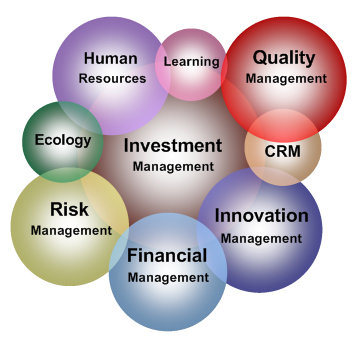
Dr. Gary Cort and Natalia Scriabina have identified the most critical trends for achieving sustained success of an organization. The seven sustainability trends provide a strong platform for building intangible values focused on achieving sustainable success.

In this part of the evaluation you will verify your awareness in the areas of increasing importance for both sustainability and quality, through the prism of ISO 9004.

#1 Innovation Management

Please choose the most appropriate answer:

1. Innovation can be measured and managed as a process.
2. Innovation is not mentioned in any other standard of ISO series 9000 and/or other version of ISO 9004, except ISO 9004.
3. There are two main categories of innovation.
4. ISO 9004 suggests that it is necessary to plan and prioritize innovations.
5. Based on the contents of ISO 9004, there are no criteria to clearly differentiate innovations from improvements.

Part 3 — Sustainability Trends (continued)

#2 Proactive Learning

Please choose the most appropriate answer:

1. Approaches to learning can be fully evaluated by reviewing competence, awareness and training processes.

Questions 2 through 5 reference the contents of ISO 9004.

2. A learning culture that treats weaknesses as opportunities is characteristic of the highest maturity level for sustained success.
3. Learning generated only from systematic analysis of problems can be characterized as reactive and is an attribute of low maturity levels for sustained success.
4. The foundation for improvements and innovations is the ability to obtain reliable information from external sources.
5. Knowledge management systems, tools and formal processes are cited as important factors in achieving sustained success.

Part 3 — Sustainability Trends (continued)

#3 Strategic Partnership

The following questions reference the contents of ISO 9004.

Please choose the most appropriate answer:

1. Partners can include suppliers, technological and financial institutions, governmental and non-governmental organizations, customers, owners, employees, and society.
2. Sharing of profits or losses with partners is one characteristic of the highest maturity level for sustained success.
3. Availability of data that demonstrate engagement and contribution of partners is a characteristic of the highest maturity level for achieving sustained success.
4. Risk evaluation doesn’t apply to partner selection in efforts to achieve sustained success.
5. Establishing relationship processes with key partners is important to achieving sustained success.

Part 3 — Sustainability Trends (continued)

#4 Adaptive Planning

Please choose the most appropriate answer:

1. The continually changing and uncertain business environment is a theme that runs through all versions of ISO 9004.

According to ISO 9004, in order to achieve sustained success, it is necessary to:

2. have a long term planning perspective
3. monitor the organization’s environment
4. address upcoming opportunities through the change management process
5. apply a “just in time” approach to identify future resource needs

Part 3 — Sustainability Trends (continued)

#5 Information Management

Please choose the most appropriate answer:

1. Warren Buffett is quoted as saying: “Information flow is the primary differentiator in the digital age. How you gather, manage, and use information will determine whether you win or lose.”

According to ISO 9004, factors that can indicate a high level of maturity for sustained success are:

2. a documented information security policy
3. established processes to identify, obtain, maintain, protect, and use information
4. regular internal information security audits and/or reviews
5. benchmarking of the results achieved in the area of information management

Part 3 — Sustainability Trends (continued)

#6 Service and Process Management

According to ISO 9004, factors that can indicate a high maturity level for sustained success are:

Please choose the most appropriate answer:

1. Anticipated service/process upgrades are planned and evaluated.
2. Service/process parameters are above the average sector.
3. Process/service is defined and managed.
4. Process responsibilities are defined clearly.
5. Learning is shared between process owners and interested parties.

Part 3 — Sustainability Trends (continued)

#7 Social Responsibility

According to ISO 26000, the core subjects and issues of social responsibility are:

Please choose the most appropriate answer (True or False):

1. Organizational governance
2. Philanthropy
3. The environment
4. Business Continuity
5. Labor practices

Submit Your Evaluation

You have completed all three parts of the evaluation. Please enter your contact information below to view your results.

Your information is kept confidential and will be used only to assist you in assessing your skill level. We do not share your information with third parties.